The Great Blue Heron

20160208_165705

The Great Blue Heron is among the most regular of the birds I see along the Monocacy.  Regular, but not common.  The birds are tall, elegant and brilliantly marked and feathered.   Their size still takes me by surprise, especially when I’ve startled them into flight and they  appear suddenly beside me, strikingly prehistoric looking.  In them, I can see the relationship between birds and dinosaurs.  Just look at these heron footprints I found a few days ago, and for comparison’s sake, imagine your handprints in the mud alongside them.  Those footprints are bigger.
20160208_165506

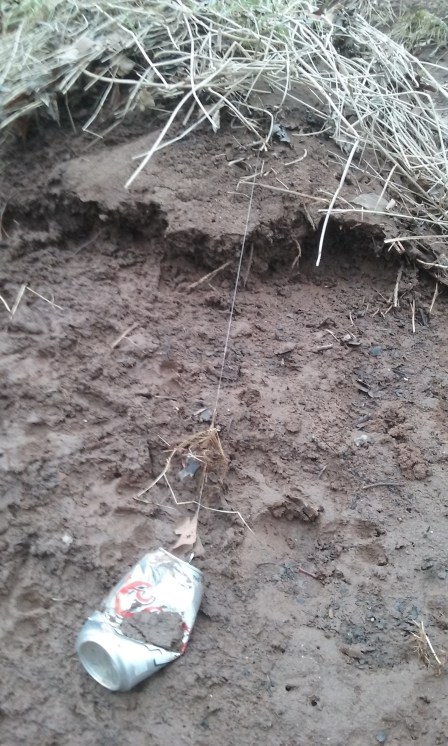
Unfortunately, I’ve encountered one of these fabulous birds caught in fishing line that had gotten tangled in a tree.  It was, understandably, upset and not a little intimidating.  But, fortunately for the bird (and, for me, who would’ve been plagued by guilt), a daring man decided to stop, hazard his own skin, and cut it free. Fishing line (as seen in the photo above, attached to the interior of a beer can) is another thing that I find quite regularly along the Monocacy.  During the summer, the river is a popular destination for fishermen (and women, not that I’ve had any luck, which is another story) to dip their rods in the murky water.  Often they leave behind the styrofoam cups that held their bait and the cans, bottles and wrappers from their picnic lunches. Those bits of trash are annoying, but the fishing line is dangerous.

The good news is that it’s a piece of trash I don’t have to pick up and take home with me.  The city of Frederick has set up little stations to recycle the line at most locations where fishing is a usual pastime. That includes parks along the Monocacy, including Riverside Park under the Monocacy Avenue Bridge, which is the most accessible in the city.


Boats for Mice

It’s been warm and clear the past 2 days, which has allowed the recent floodwaters to recede and the debris left behind to dry in the sun.  As this happens, lots of bundles – leaves, grass and, often, trash, tightly bound by dried mud – appear on the tips of tree branches, like mittens. One boy I know likes to slide the bundles off and let them go down the river.  He imagines them as tiny boats for even tinier mice.

About Trash on the Monocacy

The Monocacy River is my river. I’ve lived along many, including the storied Mississippi, but the Monocacy is my home. A little urban, a little rural, deep in parts, but much too shallow in others, neglected, overused, dumped in (and on), ugly as often as it is beautiful, it is home to thousands – no, billions – of plants, animals, and people. I walk through it every day, pleased in its averageness, finding places for children to play or dog noses to sniff, taking note of the birds and change of seasons, gathering stinking mud on my boots, and I try to make plans and make sense. What have I done right, what have I not done, what should I have done, what will I do, what are my children doing, what will they do, is there anything any of us can do that will make any difference? Always, as I walk, I pass crumpled bottles, dirtied cellophane wrappers, and shredded plastic bags, tangled in trees, half-buried in mud, and hidden beneath dead leaves and grass.  These bits of garbage interrupt me, and, while at first I let them irritate me, I have finally let them answer me.  Now, with my own used bag, I set out to find the trash, ferret out each piece, and actually notice it, acknowledge it, put it in my bag, and leave one small part of the Monocacy a little cleaner, a little more what it should be, a little more itself. My actions aren’t original, of course, and I’m not a particularly spectacular environmentalist (which a smug part of me might hope to be). In fact, I’m more than a little selfish, because I like to see beauty, and that’s why I act.  It’s in so many things.  Even in the trash. And its disappearance.  That’s what this blog is about.  Finding the beauty in the ugliest, most ordinary, most overlooked places and things.  The trash on the Monocacy River.