A Cold Wind

Winds gusted up to 41 miles per hour over the weekend, ushering in colder weather and, as it turns out, lots of plastic bags.

I used a large one from Pier 1 to gather up all of the others, as well as some wrappers (evidence of Halloween is still out there!) and scattered pages of newspaper. The wind also scattered some more natural debris, like this little nest of grass and cottony seeds:

20161121_100748.jpg

It likely belonged to a mouse or some other small rodent sheltering in the tall grasses just beyond the floodplain. Last week my younger dog managed to stir one out of a hollow log along the sandy banks of the river. Although I didn’t get a very good look before it disappeared, I saw enough to know that it was a long-footed mouse.  There are several species of mice in Maryland (see Maryland’s DNR mammals page for a list). This one, I hope, was able to make a new home for itself (if a hawk didn’t get to it first).

Yesterday, as the winds were calming, I discovered the first ice on the river. It was thin and only very spotty, but still a sign that winter is coming.

20161122_160152.jpg

I like winter, so that is something to be thankful for.

Four Feet on the Monocacy

20161113_132905.jpg

Yesterday was a good day for sitting by the river. It was warm, and I had my binoculars, lots of trash bags, and only my younger son with me. The older was in the mountains with his father and our younger dog (who, as it turns out, was dodging hunter’s bullets), and, when I took out the leash before our walk, our old labrador had cracked open her eyes, sighed and given me the most rueful expression a dog could muster. I took pity and, with one boy and no dogs, found enough peace to sit down with my binoculars and look for birds.

It’s a time of transition. The noisy red-winged blackbirds have left the marshes, replaced by finches and sparrows and other lesser-seen migrants feasting on the seeds of spent grasses and wildflowers. My favorite juncos have reappeared on my deck, looking for the seed I had kept tossed across it last winter and spring. Just for them (and the cardinals, finches and increasingly vocal squirrels), I resumed the custom last week. Every day now, it feels as if I’m having old friends over at the house.

On the river yesterday, I saw chickadees, nuthatches, juncos, goldfinches, chipping sparrows, house finches, robins, cardinals, crows, a kingfisher and a red-tailed hawk. In other words, nothing new or remarkable enough to be of interest to my younger son, who was contenting himself with styling swords and spears out of branches. Then, just as I was giving up my search (because this is always the way and is so narratively handy), I saw something large moving on the opposite bank of the river. Thinking that it might be a wild turkey, I grabbed my binoculars, only to realize, as it further emerged from the trees, that it was a fox.

20161113_133334.jpg

As it happens, I am uncommonly fond of foxes, a fact for which, I am ashamed to say, Disney must either be blamed or credited. When I was a girl, I fell in love with the animated Robin Hood of Walt Disney, who, as you may remember, was drawn as a handsome, well-spoken, red fox. Likely this early crush was only exacerbated by Wes Anderson’s stop-action adaptation of Roald Dahl’s Fantastic Mr. Fox, which is chock-full of lovely foxes (including the title character, voiced by George Clooney). Of course, they’re beautiful, interesting creatures all on their own (if you’re not raising chickens). Lots of nature photographers and videographers have caught them adeptly diving for mice in the snow or slinking about with their long tails held low and keen eyes high. So, of course, I was overjoyed when I saw this fox prowling along the shores of the Monocacy.

After I satisfied my own hungry eyes, I quietly alerted my younger son, who took the binoculars and held on to them until the fox disappeared into the distance. While he watched, he hushed me when I tried to speak or move and was clearly as mesmerized as I was. Even after the fox was gone, we both just smiled at each other as if we shared some special secret. Or at least I thought so.

Until my son looked at me seriously and said, “Now I’m gonna have the song What Does the Fox Say? stuck in my head the rest of the day.”

Sublimity, meet the Internet.

A Model Dog

When I’m taking pictures for my blog, I generally make a point of moving the camera so that my images don’t include my old labrador companion, Poppy. Since she makes a point of shadowing me, no matter how her bones ache, excluding her isn’t a simple matter. Yesterday was no different: I paused for a picture, and, while I fiddled with the composition and perspective, she walked into the frame. Again,

and again,

and again.

It’s hard to be too upset, though, when, first of all, she’s sweet and adorable, and, second, she often improves the pictures, imbuing them with life and interest that landscape alone sometimes can’t. Even if it is a brilliant fall day, which it was.

20161105_163106.jpg

Besides, she’s been known to help me with the trash every now and then. Yesterday she carried a McDonald’s coffee cup all the way back to the main walking path for me…and there wasn’t even anything in it for her to eat. (She is a labrador, after all, and her motives and motivations are usually pretty simple and obvious.)

20161105_171518.jpg

She really is a very good dog.


Weather, According to Caterpillars

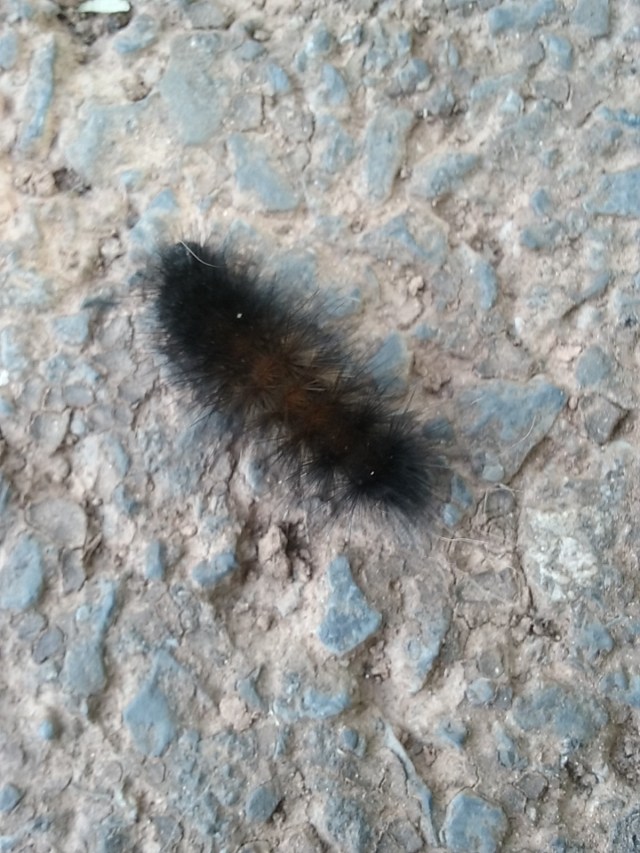
I think most people are familiar with with the folklore concerning the Woolly Bear caterpillar: the longer the black bands, the longer and more severe the winter. To be honest, according to my lifetime of anecdotal observations, this is a totally unreliable means of predicting how snowy or cold a winter might be. Just look at these two Isabella Tiger Moth larvae (a.k.a. Woolly Bears, a.k.a. Pyrrharctiae isabellae) I found a couple of weeks ago:

20161022_122159.jpg

20161022_122245.jpg

They don’t exactly look the same, do they? No. And that’s the problem I encounter every year. Arguably, though, taking these two into account, I can see a slight argument for a relatively mild winter. I guess.

What really confused me when I was younger were the Woolly Bears that weren’t really Woolly Bears. For instance, this fellow, the Virginia Tiger Moth caterpillar (Spilosoma virginica), is entirely blond:

20161022_122057.jpg

Is he trying to tell me that I should winter in California? No. Absolutely not.

Finally there are some decidedly un-woolly but incredibly interesting caterpillars that hang about in the fall. I think that this Eastern Comma caterpillar (Polygonia comma) is just perfect for Halloween, when it made its appearance:

20161006_164545.jpg

Just don’t ask it about snow.

Connections and Clean-Up

20161007_085801.jpg

The Monocacy River, which is the largest tributary of the more famous Potomac River (it flows by George Washington’s home, Mt. Vernon), has several tributaries of its own. One of these is Israel Creek, which is part of the lower Monocacy watershed. For the most part, Israel Creek winds its way through farms and pastures, collecting runoff on its way to the Monocacy. The Chesapeake Bay Foundation, in an effort to combat the erosion that encourages this runoff, has organized a planting of 1,000 trees along the banks of Israel Creek where it passes through a cattle farm in Woodsboro, Maryland. It is calling for volunteers to help with the planting tomorrow at 9:00 a.m. For more information, read the Frederick News-Post article, “Hands Needed to Protect Creek in Woodsboro,” and to sign up, go to:  http://www.cbf.org/events/other/md/restoration-events.

Update: SLE (Stream-Link Education) maintains such riparian plantings every fall. See http://www.streamlinkeducation.org for more information.


Love, Up Close

IMG_0433

This is the very first image I posted on my blog: my original header.

Initially I hesitated to use it because the Monocacy, the polluted but lovely southern river for which this blog is named, is nowhere to be found. Ultimately, however, that is one of the very reasons that the picture is so appropriate. A river is more than the water that flows into it; it is the land that surrounds it. It is the land that determines its health. It is on the land that I find most of the trash that pollutes its waters.

But this image is really about the heart spray-painted on the trunk of the dead tree. Ostensibly it is vandalism, a sort of trashing of nature, but the symbol and its underlying message imbues it with its own sort of beauty. It also reflects my feeling toward this small part of a much larger ecosystem. This heart on this tree is on a small island on a small river (the Monocacy) that flows into a larger river (the Potomac) that flows into a delicate bay (the Chesapeake) that opens into an ocean (the Atlantic). This space is so much more than it seems. And so is the tree.

Let’s look a little more closely. A heart:

20161007_170744.jpg

And more closely still. An imperfect heart:

20161007_170815.jpg

And even closer. A mere smudge:

20161007_170826.jpg

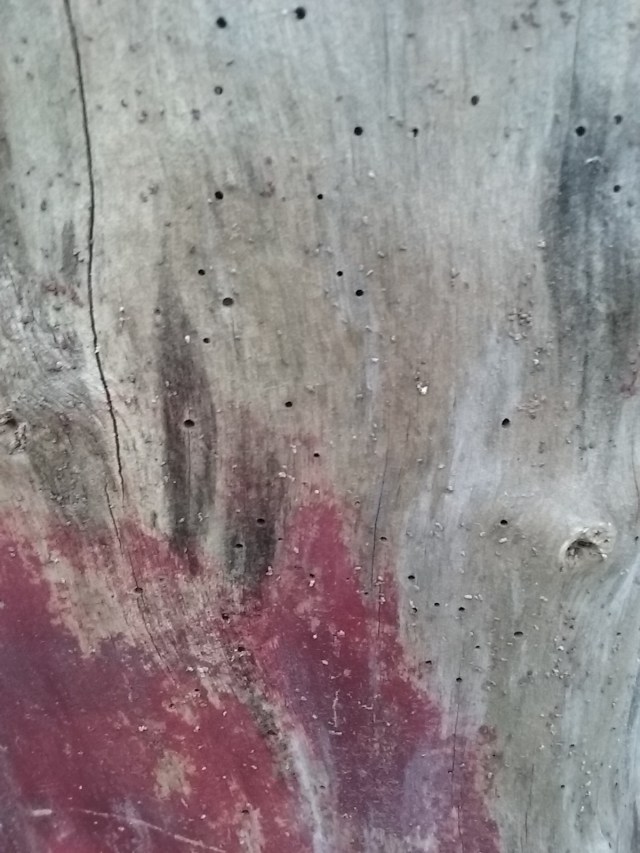
Or something more. This heart on this dead tree is the marker for an entrance to a whole other world. It hides the holes made by birds looking for insects looking for food looking for a home. If I were a microbiologist, I could say more, but even my limited knowledge allows me to appreciate the complexity of the life provided by this rotting trunk.

And appreciation is what this blog is about. Appreciating the ugly in order to appreciate the beautiful. Appreciating the moments that make a small life big. Appreciating the life around me so easily overlooked. Appreciating how often things are not quite as simple as they seem. Appreciating a world of writers, thinkers and artists who may not think of themselves as any of these things.

Love from the Monocacy.

Civil Wars

20161015_162405.jpg

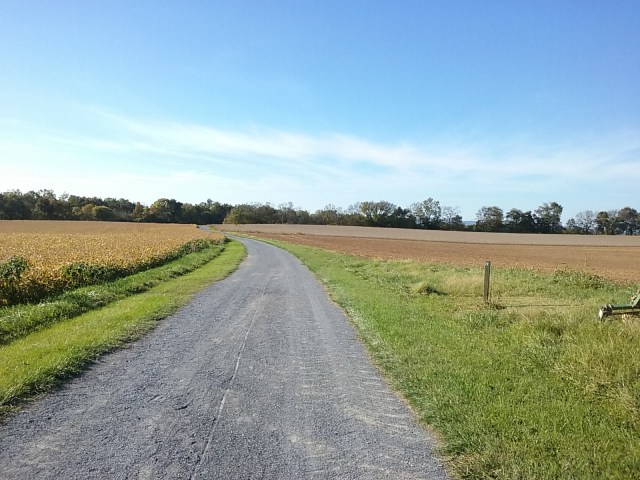
Last weekend my father and I attended a ranger-led walking tour of the Thomas Farm on the Monocacy National Battlefield. The weather was a bit cooler than it had been on July 9, 1864, when the Confederate army, led by General Jubal Early, achieved the only Confederate victory on Union territory against the much smaller Union force, led by General Lew Wallace. But the skies were clear, the sun was bright, and the fields, still actively farmed, were full of soybeans ready for harvesting. On the Thomas farm, there are only rare glimpses of the Monocacy River, which played a pivotal role during the battle’s action. Its 2.5 miles of shoreline are much more easily accessed by other trails on the battlefield, such as the loop at the Gambrill Mill and the easy walking paths at the Worthington House. The Monocacy Battlefield’s visitor center, just off of Rte. 355 (historically known as Urbana Pike), is worth visiting if you have any interest in Maryland during the Civil War. The Battle of the Monocacy doesn’t have the fame of nearby Antietam and Gettysburg, but it does of the distinction of having saved Washington, D.C.

Some might call that a dubious distinction, especially these days.


Cooler Reflections

20161010_160806.jpg

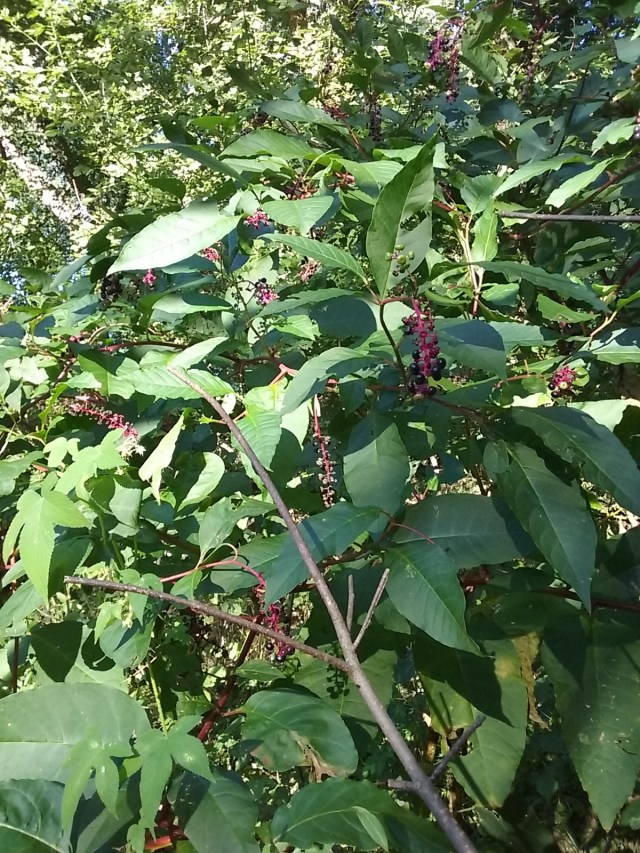
I’m sitting on the thick branch of a fallen tree, perched just above the waters of the Monocacy and hidden by dangling bunches of ripe pokeberries. The berries are poisonous to us but good food for the birds, who already have consumed about half of the deep purple fruits, leaving the empty magenta stems as simple ornaments.

20161010_161201.jpg

There is a pair of chickadees in a nearby tree, their voices more obvious than their tiny feathered forms. They hang from the japanese hop vines, eating their ripe seeds. If I sit still long enough, I’ll see more birds, like the downy woodpecker that just stopped to inspect the maple tree on my right.

It’s perfect sit-and-watch weather, cool and clear and mostly free of the annoying flying insects that plague late summer days. Of course. It’s fall now, but early in the season, when most everything is still clothed in green and the crickets sing at night. Butterflies and moths are making their final rounds among the goldenrod, asters and sneezeweed, and wooly caterpillars are appearing on walking paths.

20161009_151034.jpg

At home I’m harvesting the last of my tomatoes and collecting seeds from my zinnias for next year’s spring planting. I hear people speak of spring as the season of hope, but in some ways fall is even more so. Despite everything.

Stars


As a beginner armchair botanist, I can hardly claim any expertise in the identification of asters. They come in such a high variety, with only the slightest differences between them, that I have wasted hours trying to distinguish one sort from another. Am I seeing a bushy aster (aster dumosus), a calico aster (aster latiflorus), a little of both, or something else entirely?  After several doubtful attempts to label a few of them properly on my Wildflowers of the Monocacy page, I’ve decided to dump pictures of them here, in a despairing blog post.

Despair aside, however, asters really are as bright and lively as the stars for which they are named. Right now, they are constellations of white light in yellow fields of goldenrod; delicate pinpricks of color.


20160928_084354.jpg

Invisibility

20160911_120903.jpg

I’ve posted about the wonders of nature’s camouflage before, but a chance meeting with a mantid (stagomantis carolina, I think) persuaded me to revisit the topic. I’m sure that you can see the marvelous bark-colored creature above, but can you see it below?

20160911_120754.jpg

Much more difficult, isn’t it? It’s a miracle he didn’t get stepped on. The funny thing is that I didn’t even realize I was taking a picture of this insect, a Green Stinkbug nymph (5th instar, chinavia hilaris):

20160909_084319.jpg

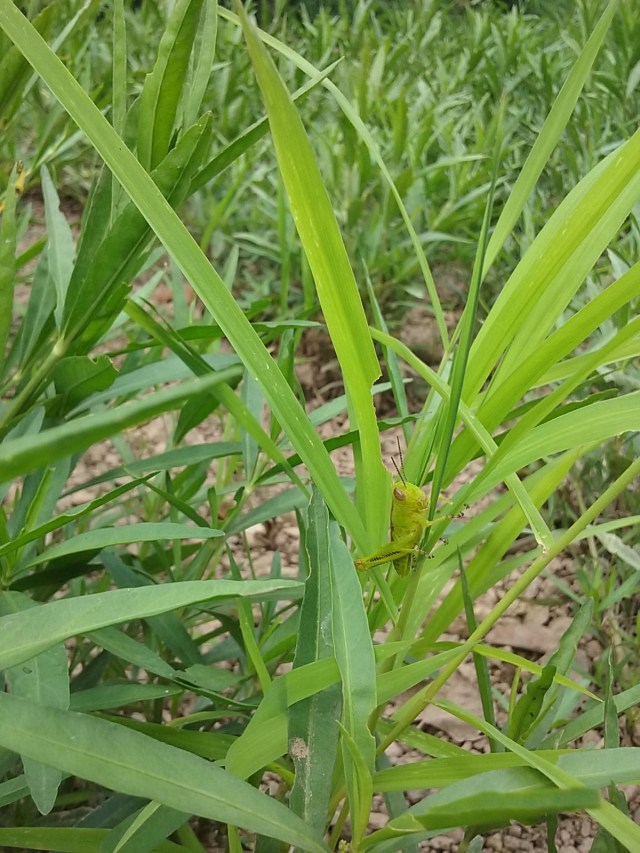
I simply meant to take a picture of the touch-me-nots. But he matches perfectly – clearly a cool pre-adult with style. He needs to give this grasshopper nymph (a schistocerca nitens, I believe) some tips on not being quite so matchy-matchy monochromatic:

20160722_144601.jpg

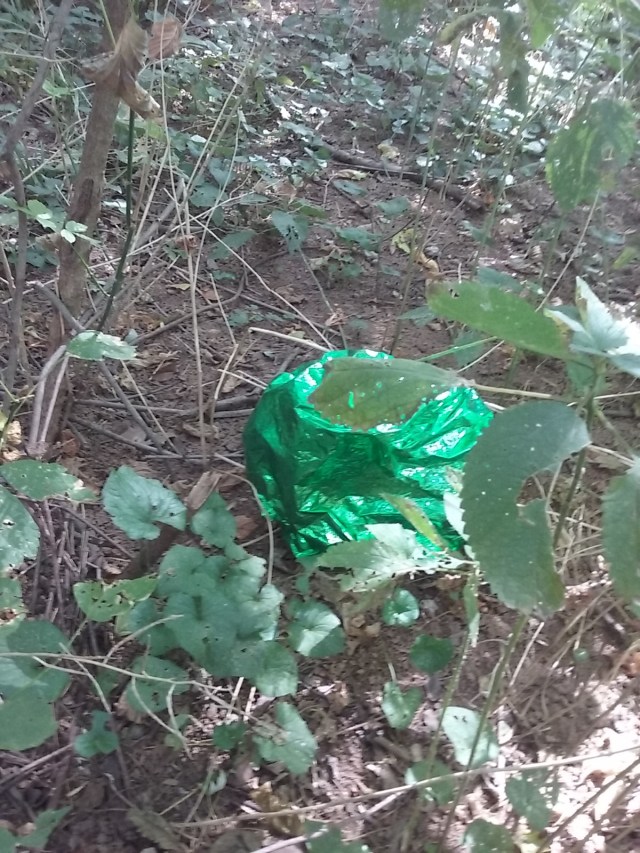
And they all need to explain to this mylar balloon that its attempt at camouflage is an absolute fail:

20160911_122648.jpg

That green is too bright, and it’s altogether too shiny.