Domestic Life

In some effort to keep this blog anonymous, I have refrained from mentioning my home in any specific or explicit terms. Nonetheless, it is necessary to this project.  If nothing else, it is its nearness to the Monocacy River that makes it possible for me to make my trash-collecting expeditions on a daily basis. In some ways, though, I am ashamed of that nearness.  My home is in a new (because 15 years really is new) development that certainly contributes to the degradation of the river. Believing in restricted development and loving history, my first two homes were built at the turn of the 20th century, when walls were plaster, there was only one bathroom, and (at least in one case) insulation was horse hair.  Now I have vinyl siding and windows, three bathrooms, fiberglass insulation and covenants that require I get permission to plant a tree.  My only solace (or maybe I should say rationalization) for my home is that it was built on farmland that had already been deforested in the eighteenth century, and agricultural runoff is one of the primary polluters of the Monocacy.  Also, I don’t use poison in my yard or garden, I plant native species to help the birds, butterflies, and bees, and the neighborhood has made the parkland and trails by the river more vibrant and, therefore, I hope, more cared-for.  But, as I confessed, these really are sorry rationalizations.

Still, this year, the birds seem to have taking a liking to the house. For Christmas, I hung evergreen arrangements on my front porch.  When January came, I removed the bows and artificial holly, but left the greenery – bits of pine, juniper and fir – to keep the house encouraging over the brown and dreary winter months.  In late February, I noticed that a bird seemed to spending nights nestled in one of them.  My husband and I would look out through our front window at night to see its little gray tail poking out of the juniper, but it would flicker away, nothing but a dark, quick shadow at the corner of my eye, as soon as we opened the door. For a few weeks, it seemed to have gone, and I was about to toss the now brown arrangements, when it suddenly returned, accompanied by a rosy-headed mate (house finch…of course!), and, with frayed bits of string and withered grass, transformed its cozy roost into a nest.

Only a few days ago, four naked babies successfully hatched, and it’s proven impossible to keep my older son away from them.  He’s not uninformed enough to believe the myth that touching them will make their mother stay away, so I’ve instead lectured him about germs, and, out of my extensive reading on trauma, attachment, and brain development, have concocted a theory, which I repeat extensively, that disturbing the babies will put undue stress on both them and the parents, which, in turn, will hurt their health and development, thereby making it less likely that they’ll live long and healthy lives. It’s convoluted, but it works most of the time. At other times, though, my son son insists that he loves the babies and wants badly to take care of them. When I say that he can’t, he asks why not, and our conversation ends with, “Because you’re not a house finch.”
 

20160309_111626.jpg

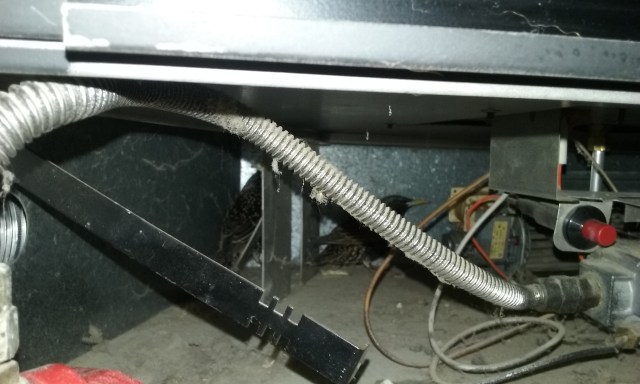
In addition to the house finches, we have a pair of starlings that tried to build a nest in our chimney.  Far from succeeding, they actually fell through the duct work and landed in the vent beneath our gas fireplace. It took me a bit of time to realize what had happened because it’s quite usual for me to hear the rustle of feathers and squawks and calls echoing from the top of the chimney, through the flue, and into the vent.  But my dogs kept staring curiously at the fireplace, ears cocked forward like question marks, and as I watched them I saw a little yellow beak peek through one of the slats that cover the vent.  Now curious myself, I bent down, pulled off the cover, turned my phone into a flashlight, and discovered two very frightened birds huddled behind the gasworks. Unsure what to do, I left to look for some sort of container to hold them and a long object to compel them to move, when one, then the other flapped furiously out into the living room, the kitchen, and finally the large window in the foyer.  Hastily I opened the front door and waved the crab net I’d found (because Maryland = crabs) at the the birds, who wanted frantically to believe that the window was their only salvation, until they finally dropped a foot down to see that freedom was out the front door.  It’s possible that the starlings I see atop the trees in my yard are these same birds, but it’s just as likely that they were traumatized enough to move on.

So, there are these adventures.  And the collecting the trash.  And this blog.  All in this house of dubious environmental efficacy. I’m the sort who feels guilty all of the time anyway, so I’ll just do the best I can, what little I can, live in this house, and remember to be grateful. And when my homeowner’s association writes me up for keeping dead evergreen arrangements on my porch, I’ll smile, pay my fine, and put out more seed for the birds.

The Wild Life, Part 2

There is a dirt path off of a paved trail that leads to a sort of overlook of the Monocacy River.  There, one can simply stand and watch the murky river wend its way toward the Monocacy Boulevard Bridge, or one can skid down a steep and often muddy trail toward a makeshift footbridge that provides access to the water. Usually this is a popular spot for fishermen, but this morning I encountered two painted turtles instead. As I generally only see them sunning themselves on logs from a distance, I was surprised to find them in the shade on a rocky path.  I assume that they forgot to move with the sun, which, like the water, was only a few feet away.  When I moved off with my two unimpressed dogs, the smaller one peeked out of its shell and gradually scrabbled toward the water.  The larger one, which remained calm throughout the ordeal, apparently wanted another chance at the snooze button.

The good news for these river-dwellers is that I’ve been encountering far less trash.  The visible sort, at least. The cleanliness of the water, subjected for miles to agricultural runoff and the vagaries of development, is another matter entirely.  For those who are interested, I have been gathering links to information about the river’s history and conservation on my page The Monocacy River.

A Bridge Over

20160415_162939.jpg

There are so many irresistible, pop-culture puns on bridges, and all of them are awful and overused, therefore I will not finish the title of this blog with a nod to Simon and Garfunkel. I refuse.  Because you can finish it yourself.

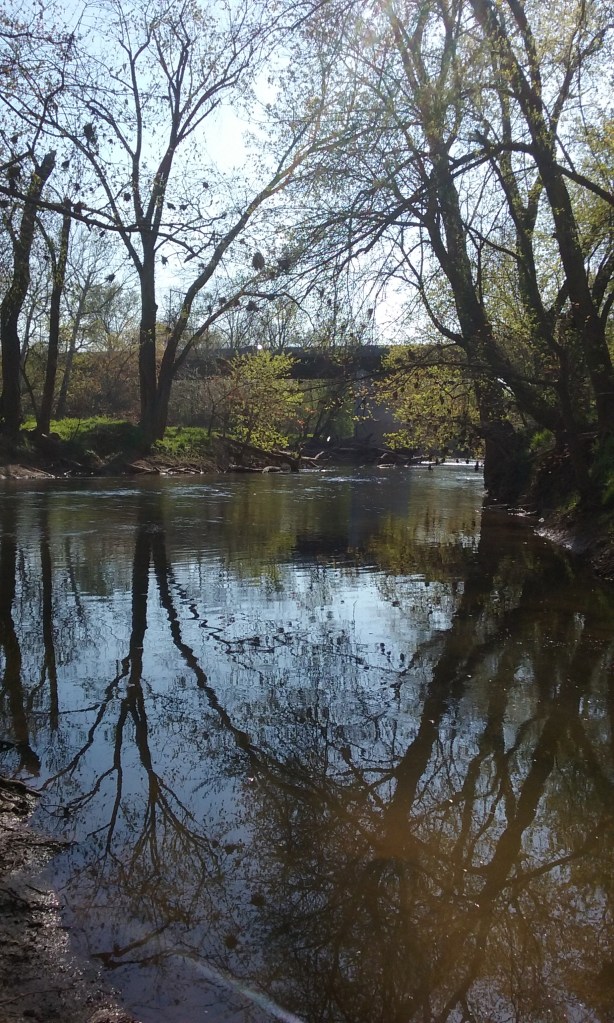
I’ve done a pretty poor job lately of pointing out the beauty in the ugliness of the Monocacy River, as I originally promised to do in my “About” introduction.  Really, there’s just too much conventional beauty this time of year to focus on the unconventional, or, at least, it can seem so when you when you shut your ears and imagine away what doesn’t suit.  In fact, as an urban river, the Monocacy can be a loud, brown, smelly place, particularly where I walk every day.  For instance, as I took this picture yesterday, I was inundated not just by birdsong, as the peaceful photograph suggests, but by the windy roar of cars passing over the bridge to a nearby highway, the distant grumble of a jet on its way to Dulles, and the industrial drumming of a helicopter landing at the local airport. (A fun fact: sometimes the helicopters I hear are carrying the president to Camp David). Also, there was a distinctly fishy smell emanating from the bank below, not to mention the sulfuric funk traditional to standing water mixed with rotting organic material.

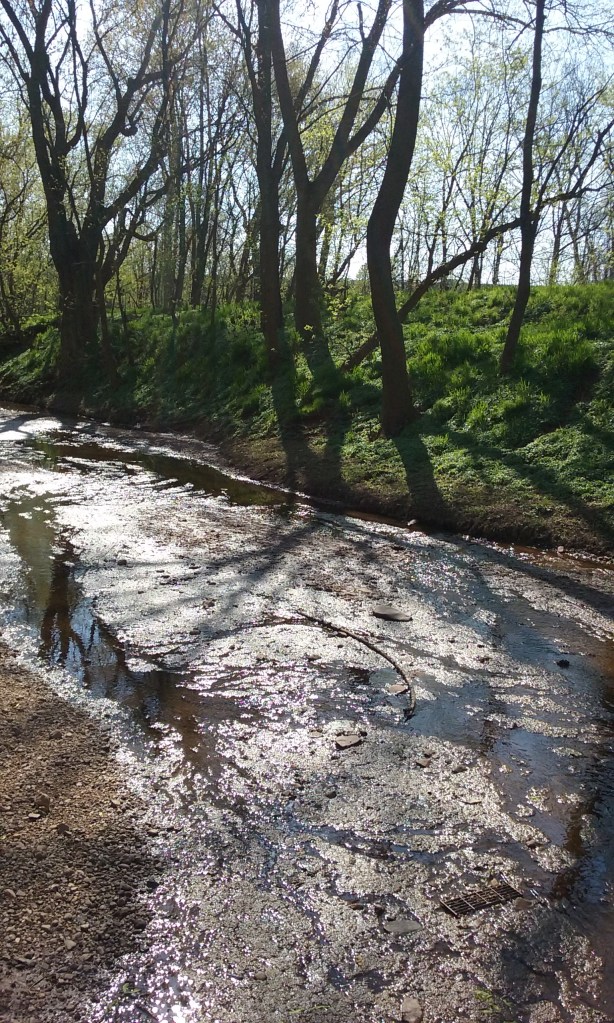
I could drift into poetic enthusiasm about the joy of witnessing a kingfisher dive into the river and emerge successfully with a minnow in its beak, or how the setting sun sparkled on the miniature tributaries in the muddy shallows, or how a swallowtail slipped through the trees in mute conversation with the goldfinches and cardinals, but there is another truth. The kingfisher’s bickering chatter competed with belching diesel trucks, the water was choked with muck (and a random metal grate), and the swallowtail flitted over cellophane and alien species choking out native wildflowers. If I am a reliable narrator, which truth do I share with you?

The first photo?

Or this?

20160415_161646.jpg

Or this?

20160415_161826.jpg


Birds of Prey Are Cool

20160415_101805.jpg

A few summers ago, my son participated in a day camp at the Catoctin Creek Nature Center.  One day, he came home eager to share something with us: a YouTube video. (Yeah, I know, I thought that it would be a cool feather or something, too). So, he typed “Birds of Prey Are Cool” into the search tool, and up came an educational video about (obviously) birds of prey, featuring a montage of film and pictures set to a weirdly catchy, folksy, guitar-strumming song cataloging each bird. Although it’s been years, we all still break out into song almost every time we see a hawk, eagle or vulture, which, embarrassingly, is not rarely.  In case you would like to do the same, here it is:

Birds of prey are common along the Monocacy, and, while I do see eagles, vultures (both Black and Turkey), red-tailed hawks, and barred owls are the most easily spotted (or heard). There is a pair of hawks that reliably nest not far from my neighborhood, and vultures glide over us in broad circles nearly every day.  In general, I see these birds from afar, but lately my interactions with them have been a little more personal.  While walking through a wooded area a few weeks ago, I disturbed a couple of turkey vultures and a crow who were feasting on a rabbit. While the crow chased off one vulture, the other flew in my direction, headed for a nearby branch.  Though not beautiful, turkey vultures are large, impressive birds, and my young hound mix was threatened enough to jump onto her hind legs, pull against her leash, and let loose a barrage of growling barks.  Eventually it was annoyed enough to leave, flying low and heavy through the trees.  Then, only two nights ago, at dusk, a barred owl squatted comfortably on a neighbor’s roof, allowing itself to be seen and chattered at by every small bird within a quarter mile’s radius. It was completely nonplussed, and no doubt was the same owl who couldn’t stop repeating his questioning hoots a few nights before. (The barred owl is the one who so famously asks, “Who cooks for you?”)  It took my son forever to fall asleep because he couldn’t resist opening the window and leaning out into the cool dark to hear the owl better.  The owl did get his answer that night, but it was from another barred owl, not us.

Today, in addition to a red-tailed hawk diving into the trees and a turkey vulture soaring in the distance, I saw a few other surprising birds, who, while not birds of prey, are predators in the eyes of fish and other swimming things.  Just as I approached the river, a belted kingfisher leapt from a tree toward the opposite bank, and below, on the water, I found a double-crested cormorant swimming on its own.  Both of these birds are ones that I feel lucky to have found, especially on the same day.  If you haven’t seen a belted kingfisher, you should look at my “Birds of the Monocacy” page, where I record all of my avian sightings.  The belted kingfisher really is a hilarious bird, something of a mix between a blue jay and a kookaburra.

But what has this to do with trash?  Well, to be sure, the vultures do a far better job keeping the river clean than I do.  They’re not very interested in picking up all the plastic, of course, but I’m not so inclined to deal with rotting flesh. I happily leave that to them.

When There Are No Pictures

Yesterday, while reconfiguring a temporary (and mostly imaginary) dam, my oldest boy discovered a snapping turtle under a rock.  Normally this would call for some panicked maternal shrieking – PUT THAT THING DOWN! – but the snapper was a baby, no bigger than my hand, and apparently too stunned to move. Nonetheless, my son, demonstrating an uncharacteristic streak of self-preservation, quickly threw the thing back in the water. “Wait!” I called out, too late, “I wanted a picture!” My son looked at me, then at the water, still rippling from the snapper’s entrance, then back at me. He didn’t have to say, “Are you crazy?  Those things bite!” His incredulous, clearly-I’m-smarter-than-you-mom teenage expression rendered such words self-evident.  Still, I felt in my pocket, grabbing for my phone, as I scuttled down the bank toward the river.  But there was no phone. No camera. Opportunity missed. Damn. I suffered the same frustration a few minutes later, when my boots left lovely prints in the carpet of bright green celandine leaves on the island, and again, only a few minutes after that, when I found the remnants of the nastiest picnic I’ve yet encountered: an empty 2-liter bottle of Strawberry Fanta accompanied by an also empty 2-pack of fruit punch flavored cigarellos. I could only imagine the hyped-up, nerveless state that such a combination of caffeine, sugar, nicotine, and artificial color and flavor would knock into a person.

In fact, I haven’t had this constant access to a camera for very long.  I got my first smart phone only a few months ago, after I lost my old flip phone somewhere at JFK airport on the way home from visiting my sister (whom I subsequently freaked out because the last thing I texted her before misplacing the phone was something like, “I think this taxi is taking me the wrong way.”) I am what you might call a late-adopter of technology.  I resisted the smart phone partly for financial reasons but also because I was afraid that it would distract me.  What I didn’t anticipate is how much I would come to depend on it. It’s wonderful because it has made this blog possible in a way that it never really was before, but it is also one more thing in this loud, artificially-flavored-and-colored modern life that serves as a barrier between me and the world of dirt and skin and breath. So, just for today, no picture.

But I’ll probably make up for it tomorrow.

Save the Invertebrates

Foraging for trash proved a lifesaving mission yesterday.  While exploring the island, I came upon a bright yellow container advertising “18 Canadian Nightcrawlers.”  Since the top was off, I could see that there was still dirt inside. Assuming that a fisherman wouldn’t leave perfectly good bait to shrivel in the sun, I dumped the soil to put the container in my bag and was surprised to see several long, meaty worms fall writhing to the earth.  Hastily, I gathered them back up into the container.  But, after looking around in vain for the careless fisherman, I agreed with my boys that we should liberate the nightcrawlers (poor, displaced Canadians) and give them an opportunity for a new life on the Monocacy.  The boys decanted and reburied them a safe distance from the water.  On the way home, I attempted to throw away yet another piece of garbage, a random square of cardboard caught in some wintry underbrush, when I discovered a few snails clinging to its underside.  It was an easy decision simply to return the cardboard to the ground with snails intact.  After all, cardboard biodegrades, and the snails weren’t being particularly offensive.

UPDATE, 6/14/16: I have since learned that I absolutely should not have liberated these nightcrawlers as they are an invasive species that can harm the native wildflower population and change the composition of the forest floor. Read more here. My apologies. I really am ashamed of my ignorance!

UPDATE, 4/11/16: It seems I’m destined to uncover little critters.  Today, trying to lift a piece of plastic (which I have since learned is irretrievably buried in the sand), I found a most impressive wolf spider.  He wasn’t inclined to have his picture taken, so I had to chase him around a bit. Thankfully, I don’t suffer from arachnophobia. (To be honest, I only mentioned that last bit because I have to take advantage of the few times Greek comes in handy).

20160411_111807.jpg

Trashology

20160404_164533.jpg

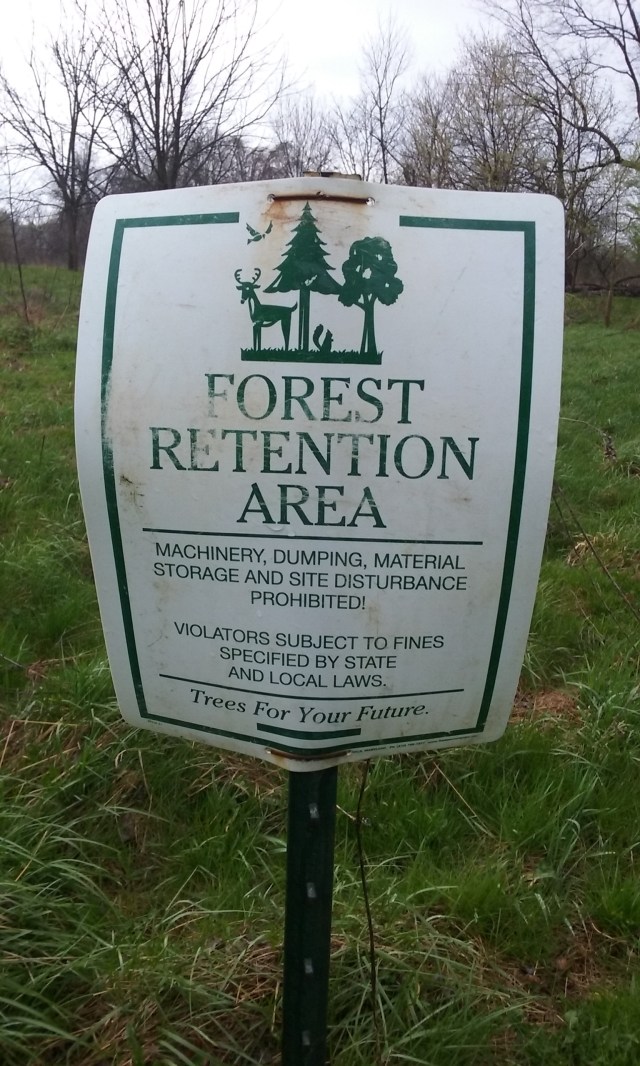
Yesterday, just for fun, I recorded the brand of every piece of trash I gathered.  I was exploring new territory, an open meadow with lots of prickly shrubs that I usually avoid (see the sign above), and the quantity of cups and cans overwhelmed me.  There was much more than I could carry:

Deer Park Water

Mountain Dew (Diet and otherwise, many times over)

Dairy Queen

Sheetz

Monster Energy

Bud Light

Wegman’s

Harris Teeter (migrating trash, apparently)

Powerade

7-11

Coca Cola

Domino’s

Olive Garden

Utz

Starbucks (for Tammy, whoever and wherever she is)

Pepsi

Tropicana

Rockin’ Refuel

Fanta (orange)

A&W Cream Soda

Gatorade

McDonald’s

Rita’s Italian Ice

I brought all of these home, some for the trash can, but most for recycling.  Unfortunately, the city only gathers the recycling every other week, so I always end up filling the recycling can, bin and extra cardboard boxes of my own to overflowing.  I’m a little concerned about how much more trash warmer weather will generate. I might have to start begging my neighbors for recycling space.

The Thing with Feathers

20160123_110241.jpg
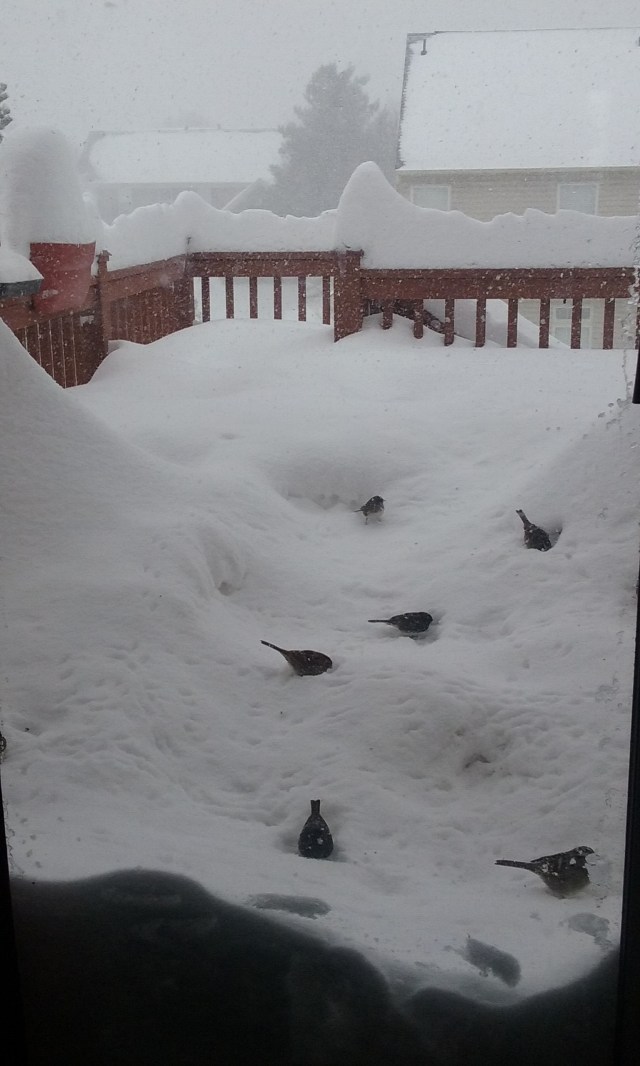
Juncos and friends braving the blizzard of 2016

When I was a little girl and people asked what animal I would like to be, which, for some reason, they did quite often, I would always answer, “A swan.” Likely I was influenced by fairy tale drawings (what was a castle, after all, without a swan swimming in its lake, preferably at sunset?) and at least a little by E.B. White’s The Trumpet of the Swan and Hans Christian Andersen’s The Ugly Duckling. The swan, to me, was the epitome of beauty and elegance, with a potential for a brilliant future, and, of course, it could swim or fly with equal grace.

When I grew a little older, I began to find the swan and bit too ostentatious, and, by the time I was a teenager, desiring total anonymity and feeling very small and frightened, I decided that I would rather be a mouse. Sometime in my thirties, although people had stopped asking, I decided again that I would like to be a bird, but not a swan. Instead, I would like to be a small bird, a common bird, one that is much stronger and and more interesting than people assume.  Maybe a chickadee, like those I watched endure Minnesota winters with cheerful fortitude, fluffed up among pine branches in their small black caps, or a junco, like a little gentleman in a gray tuxedo, so dapper and sprightly, even in the midst of a blizzard. I’m not sure, but I do admire them. And I wish that I could fly.

Because of my affinity for birds, I watch for them, and observe them, and, on a separate page on this blog, record them.  Today was a particularly good day for spotting birds at the Monocacy.  Besides the usual Robins, Red-wings, and Cardinals, I saw an American Goldfinch, an Eastern Bluebird, a few Tree Swallows, a pair of Canada Geese (accompanied, for some reason, by a bachelor Mallard), a Red-tailed Hawk, some noisy Crows, and a wading bird and woodpecker that were just too far away for sure identification.  Honestly, I was so distracted that I left quite a bit of trash on the ground. But, unlike the birds, it’s not going anywhere, and neither am I.  For now.

The Monocacy Rocks

20160403_164707.jpg

I should be writing about the fairyland that the wild blooming bluebells have made of “the island,” but it’s just too cold.  Instead, let’s talk about geology.

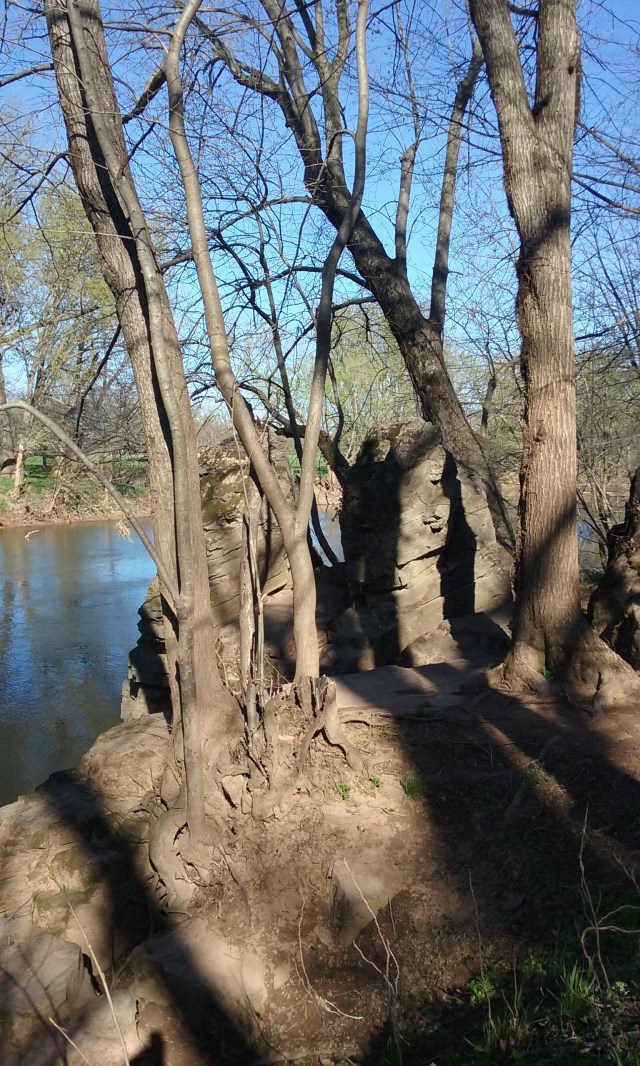
Referring to my copy of Roadside Geology of Maryland, Delaware, and Washington, D.C. by John Means (Mountain Press Publishing Company, 2010), I can tell you that the Monocacy River, which drains most of the Frederick Valley, is situated on Cambrian Frederick Limestone as it flows through the city and its immediate environs. As I walk with my sons along the river’s shores, sometimes under tall embankments created by years of flooding, we pick up lots of quartz and limestone.  My oldest son has become skilled at skipping the flatter pieces, even managing to eke out  5-7 jumps from large 5-pounders. Over the weekend we veered off our usual path and stopped at some very striking limestone formations that jutted out about 15 feet over the water.  While my son found huge rocks to roll into the river – the splash was marvelous from such a drop – I found a McDonald’s cup.  I hope it was iced tea that I dumped out of it.

Just put the trash down and…

20160404_094342.jpg

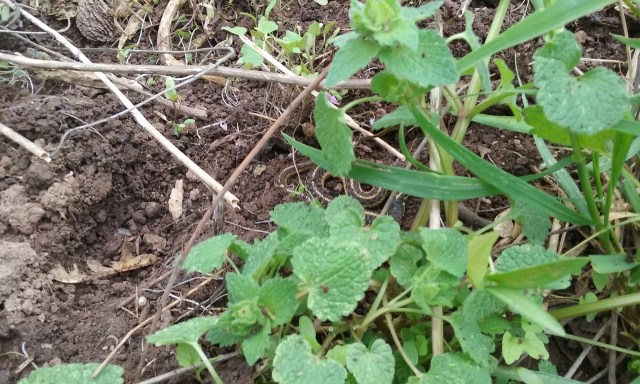
It’s been a bit cold lately, but, despite historic winds, also vividly clear and sunny.  When I went for a walk this morning it was in the 40’s, which didn’t stop any of the wildlife from going about their spring business.  In a marsh a pair of Canada geese were blaring their horns at each other, barely succeeding in drowning out the insistent territorial buzzes of the red-wing blackbirds; a groundhog cautiously popped his head out of a hole on an embankment; an audacious mockingbird cycled repeatedly through his vast songbook from the top of a sycamore tree; and more than one cottontail noisily fled from me through the underbrush.  There was, however, at least one creature hiding from the unseasonable temperatures.  Beneath a a scrap of thick, back plastic, I found a wee beastie coiled up in a loose spiral: a baby garter snake too cold even to be bothered by me.  After taking a picture (which required that I bend down only inches away from him), I recovered the poor cold-blooded baby with the plastic.  Because today it was more humane not to pick up the trash.