Let’s Pretend

20160316_101443.jpg

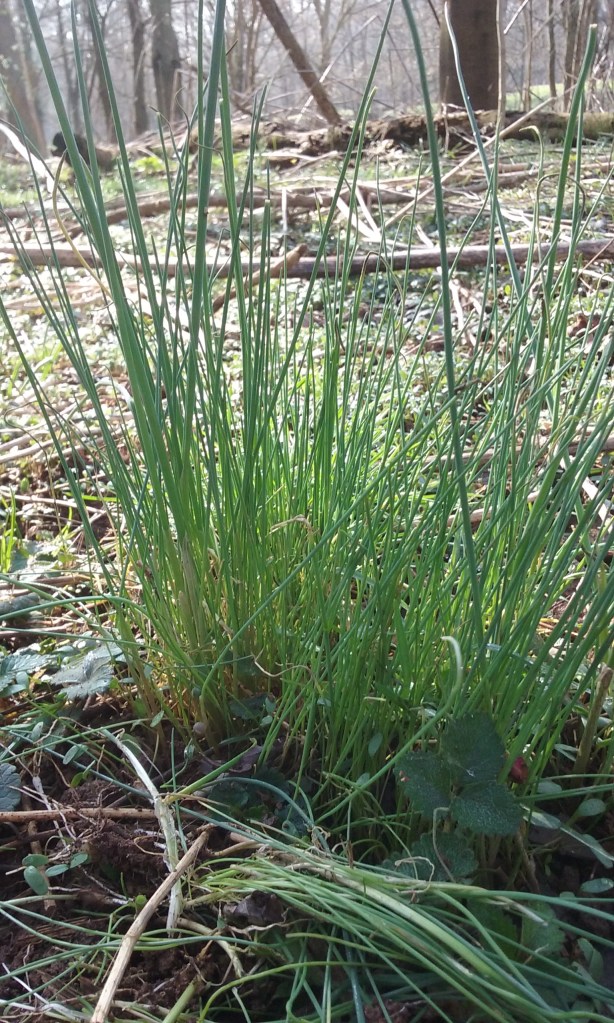
Along with wildflowers, early spring brings wild onions, which will continue to flourish through most of the summer. Whenever I see them, I remember an elaborate game my brothers and sisters and I used to play in our backyard. It was called “Shipwreck,” and, more than a game, it was a melodramatic improvisation in which we had to pretend that we’d been stranded on a desert island and needed to find a way to survive. It worked best on sunny summer days, when heat and thirst made method actors of us.

The game was simple. After “crashing” our airplane built of picnic benches and and rusty backyard furniture, we  tumbled onto our lawn, usually into the large patch of dirt we used as home base in our other games. My oldest sister was the organized one, who roused us into realizing our pathetic fate. She ordered us to find shelter, almost inevitably the tunnel formed by the spirea along the fence, and a place to sleep, generally the furniture cushions, which, after baking in the sun, had a warm, comforting mildewy smell. For food, we foraged in our battered lawn, where we could always find some mature wild onions. My sister would collect them and hang them from the bars of our swing set, as if drying them might make them more edible. The game could go on like this infinitely, because, as I recall, we never actually got saved. We just stopped playing.

Thankfully, my sister never actually made us eat the onions.  My younger son, on the other hand, used to eat them all of the time, when his older brother told him that he was Felicia the horse and that wild onions were his proper food. He also ate a lot of grass.  While he doesn’t do this anymore, he still eats a profane amount of vegetables.  We’re making our garden bigger this year.

20160316_101620.jpg

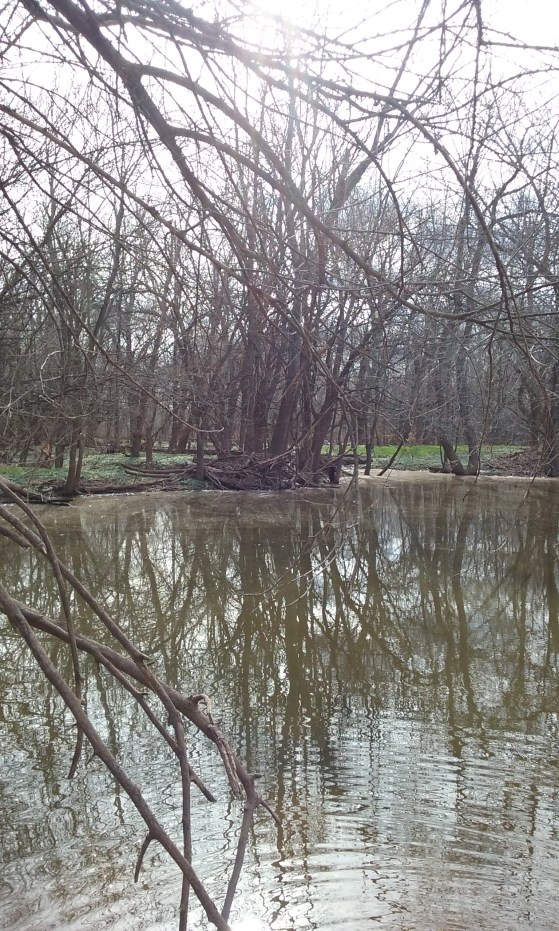
In addition to the onions, I found some lovely marsh-marigolds (caltha palustris), growing by the same temporary pond where I heard the spring peepers a few days ago.  The fresh green leaves and delicate yellow flowers are striking against the dark of the marsh.  Especially now that the shredded red plastic cup is gone.


Weeds are Wildflowers

So, if you don’t treat your lawn, your neighbors will give you the stink-eye, but you’ll also have some lovely wildflowers.  The first of the season are blooming now, while grass is the dingy green of late winter.  Above, on the left, we have Bittercress (cardamine, either Pennsylvania, which is native, or Hairy, which is invasive) and, on the right, Persian Speedwell (veronica persica). You can find a a few paragraphs about these early wildflowers in Bryan MacKay’s A Year Across Maryland: A Week-by-Week Guide to Discovering Nature in the Chesapeake Region (The Johns Hopkins University Press, 2013, pp. 62-63), which is a wonderful book for anyone who likes to tramp around the Old Line State.  While he doesn’t specifically address the Monocacy River, he often discusses the Potomac, which the Monocacy feeds.

Hidden Pictures

For convenience’s sake, I use a smartphone to take my pictures, which means that their quality is not very good, and, since my phone is the most basic model, I have no ability whatsoever to take a close-up unless I can get within a few feet of my subject.  This makes nature photography pretty much impossible, particularly if my subject is a skittish deer or a bird perched at the very top of a tree.  Nonetheless, I do try to capture an image every now and then, when I just can’t help myself, like today, when I heard the spring peepers for the very first time.  They’re here somewhere, very loudly trying to find this spring’s hook-up:

20160311_093442

Another loudmouth this time of year is the Red-winged Blackbird, which lords over the same wetland habitat along the Monocacy’s floodplain. I like listening to the Red-wings’ song, ranging from a harsh buzz to a liquidly trill, when they arrive in early March.  When I was a girl, I confused them with Orioles because of their flash of orange. Can you see the one singing at the top of the tree?

20160311_093052

Yeah, I didn’t think so.

Although springtime distracted me today, I did manage to collect a few plastic bottles.  I’ve considered inventorying these by brand or type of drink (water, soda, juice), but, unless someone makes a special request, I’ve decided that this would be rather pointless.  So, for now, I just recycle them.


The Process

Our stretch of warmth has continued, and the evenings are lengthening, which has meant that my walks aren’t so solitary anymore.  I should be glad that we’ve reached the magical 65-degree mark that pulls everyone from their homes, but I’m enough of an introvert (and self-suspected misanthropist) that I’m actually more anxious and annoyed. So, back to the trash.

Yesterday, my very first pick-up was large enough to fill my entire trash bag and force me into early retirement.  It’s just as well, because, as you can see in the first photo, the sun was setting by the time I finally wrangled the boys out the door.  There was only time enough to visit what the boys call “the hideout,”which isn’t really very hidden at all.  It’s just off a public trail, but so far below it that it can feel secluded.  The climb down to it becomes more treacherous after each flood, as the water erodes away the soft earth held together only by the roots of imperiled trees.  It is these roots that we must use to reach the hideout, and they make such uneven steps that I daily expect someone to twist an ankle. At the bottom is a stream, separated from the main river by a small “island” of trees.  The stream remains connected to the main river unless there is a drought, but the water flow is never tremendous. Unless there is a flood, I can wade across it in my green rubber boots, which is what I needed to do last night to retrieve my one large piece of garbage.

Under the roots of a decaying tree, half-submerged in the water, was a tangle of sticks, leaves and something else, white and, from what I could tell, plastic. (See the second photo, above). As I approached, I noticed tiny minnows shifting beneath the water, illuminated by the slanting light of the setting sun. My green boots sank in the mud and my movements, stirring up the muck of winter, quickly obscured them. To avoid falling into the slightly deeper water near the white plastic thingy, I used a stick to dislodge it from its nest of leaves and twigs.  It was heavier than I imagined, but I managed to toss it onto the rocky peninsula that extended from the riverbank, where I shook it out to reveal what we see in the third photo, a big old bag of Purina horse feed, weighed down by the gallons of mud it acquired on its trip down the Monocacy River.

After draining it as much as I could, I stuffed it in my trash bag, where it sat drying while I engaged in a few light-saber duels with my youngest.  His stick was less rotten than mine, so he won. I tried to persuade him that he should cheer me up by carrying the trash bag home, but he wasn’t buying that argument.  My arm still hurts.

Boats for Mice

It’s been warm and clear the past 2 days, which has allowed the recent floodwaters to recede and the debris left behind to dry in the sun.  As this happens, lots of bundles – leaves, grass and, often, trash, tightly bound by dried mud – appear on the tips of tree branches, like mittens. One boy I know likes to slide the bundles off and let them go down the river.  He imagines them as tiny boats for even tinier mice.

About Trash on the Monocacy

The Monocacy River is my river. I’ve lived along many, including the storied Mississippi, but the Monocacy is my home. A little urban, a little rural, deep in parts, but much too shallow in others, neglected, overused, dumped in (and on), ugly as often as it is beautiful, it is home to thousands – no, billions – of plants, animals, and people. I walk through it every day, pleased in its averageness, finding places for children to play or dog noses to sniff, taking note of the birds and change of seasons, gathering stinking mud on my boots, and I try to make plans and make sense. What have I done right, what have I not done, what should I have done, what will I do, what are my children doing, what will they do, is there anything any of us can do that will make any difference? Always, as I walk, I pass crumpled bottles, dirtied cellophane wrappers, and shredded plastic bags, tangled in trees, half-buried in mud, and hidden beneath dead leaves and grass.  These bits of garbage interrupt me, and, while at first I let them irritate me, I have finally let them answer me.  Now, with my own used bag, I set out to find the trash, ferret out each piece, and actually notice it, acknowledge it, put it in my bag, and leave one small part of the Monocacy a little cleaner, a little more what it should be, a little more itself. My actions aren’t original, of course, and I’m not a particularly spectacular environmentalist (which a smug part of me might hope to be). In fact, I’m more than a little selfish, because I like to see beauty, and that’s why I act.  It’s in so many things.  Even in the trash. And its disappearance.  That’s what this blog is about.  Finding the beauty in the ugliest, most ordinary, most overlooked places and things.  The trash on the Monocacy River.