Domestic Life

In some effort to keep this blog anonymous, I have refrained from mentioning my home in any specific or explicit terms. Nonetheless, it is necessary to this project.  If nothing else, it is its nearness to the Monocacy River that makes it possible for me to make my trash-collecting expeditions on a daily basis. In some ways, though, I am ashamed of that nearness.  My home is in a new (because 15 years really is new) development that certainly contributes to the degradation of the river. Believing in restricted development and loving history, my first two homes were built at the turn of the 20th century, when walls were plaster, there was only one bathroom, and (at least in one case) insulation was horse hair.  Now I have vinyl siding and windows, three bathrooms, fiberglass insulation and covenants that require I get permission to plant a tree.  My only solace (or maybe I should say rationalization) for my home is that it was built on farmland that had already been deforested in the eighteenth century, and agricultural runoff is one of the primary polluters of the Monocacy.  Also, I don’t use poison in my yard or garden, I plant native species to help the birds, butterflies, and bees, and the neighborhood has made the parkland and trails by the river more vibrant and, therefore, I hope, more cared-for.  But, as I confessed, these really are sorry rationalizations.

Still, this year, the birds seem to have taking a liking to the house. For Christmas, I hung evergreen arrangements on my front porch.  When January came, I removed the bows and artificial holly, but left the greenery – bits of pine, juniper and fir – to keep the house encouraging over the brown and dreary winter months.  In late February, I noticed that a bird seemed to spending nights nestled in one of them.  My husband and I would look out through our front window at night to see its little gray tail poking out of the juniper, but it would flicker away, nothing but a dark, quick shadow at the corner of my eye, as soon as we opened the door. For a few weeks, it seemed to have gone, and I was about to toss the now brown arrangements, when it suddenly returned, accompanied by a rosy-headed mate (house finch…of course!), and, with frayed bits of string and withered grass, transformed its cozy roost into a nest.

Only a few days ago, four naked babies successfully hatched, and it’s proven impossible to keep my older son away from them.  He’s not uninformed enough to believe the myth that touching them will make their mother stay away, so I’ve instead lectured him about germs, and, out of my extensive reading on trauma, attachment, and brain development, have concocted a theory, which I repeat extensively, that disturbing the babies will put undue stress on both them and the parents, which, in turn, will hurt their health and development, thereby making it less likely that they’ll live long and healthy lives. It’s convoluted, but it works most of the time. At other times, though, my son son insists that he loves the babies and wants badly to take care of them. When I say that he can’t, he asks why not, and our conversation ends with, “Because you’re not a house finch.”
 

20160309_111626.jpg

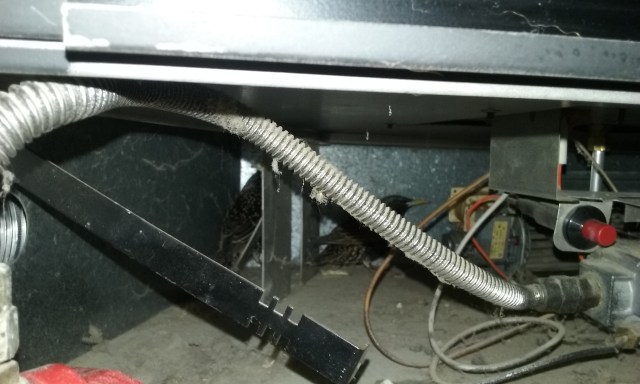
In addition to the house finches, we have a pair of starlings that tried to build a nest in our chimney.  Far from succeeding, they actually fell through the duct work and landed in the vent beneath our gas fireplace. It took me a bit of time to realize what had happened because it’s quite usual for me to hear the rustle of feathers and squawks and calls echoing from the top of the chimney, through the flue, and into the vent.  But my dogs kept staring curiously at the fireplace, ears cocked forward like question marks, and as I watched them I saw a little yellow beak peek through one of the slats that cover the vent.  Now curious myself, I bent down, pulled off the cover, turned my phone into a flashlight, and discovered two very frightened birds huddled behind the gasworks. Unsure what to do, I left to look for some sort of container to hold them and a long object to compel them to move, when one, then the other flapped furiously out into the living room, the kitchen, and finally the large window in the foyer.  Hastily I opened the front door and waved the crab net I’d found (because Maryland = crabs) at the the birds, who wanted frantically to believe that the window was their only salvation, until they finally dropped a foot down to see that freedom was out the front door.  It’s possible that the starlings I see atop the trees in my yard are these same birds, but it’s just as likely that they were traumatized enough to move on.

So, there are these adventures.  And the collecting the trash.  And this blog.  All in this house of dubious environmental efficacy. I’m the sort who feels guilty all of the time anyway, so I’ll just do the best I can, what little I can, live in this house, and remember to be grateful. And when my homeowner’s association writes me up for keeping dead evergreen arrangements on my porch, I’ll smile, pay my fine, and put out more seed for the birds.
A Bridge Over

20160415_162939.jpg

There are so many irresistible, pop-culture puns on bridges, and all of them are awful and overused, therefore I will not finish the title of this blog with a nod to Simon and Garfunkel. I refuse.  Because you can finish it yourself.

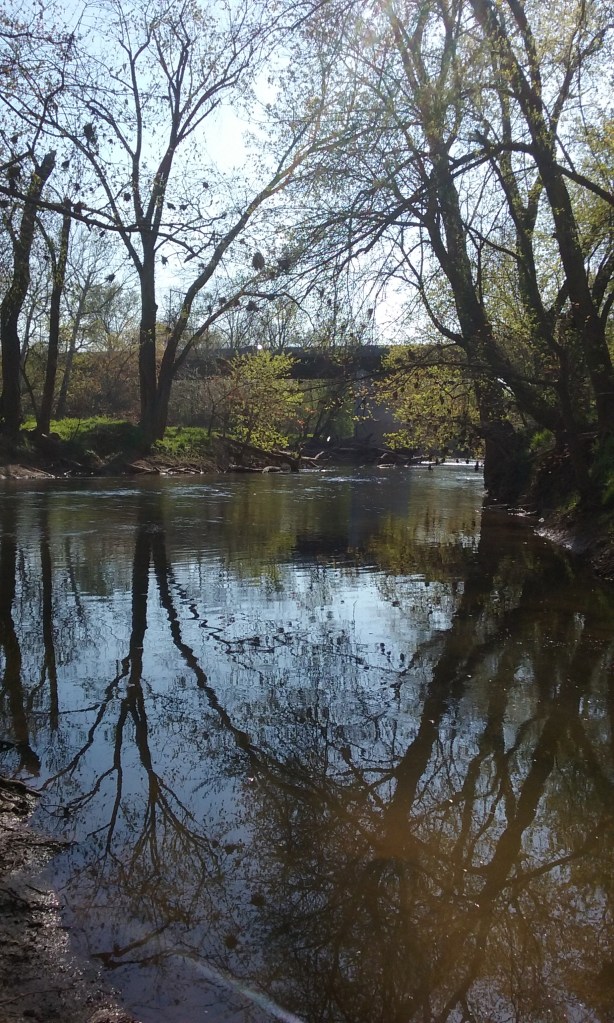
I’ve done a pretty poor job lately of pointing out the beauty in the ugliness of the Monocacy River, as I originally promised to do in my “About” introduction.  Really, there’s just too much conventional beauty this time of year to focus on the unconventional, or, at least, it can seem so when you when you shut your ears and imagine away what doesn’t suit.  In fact, as an urban river, the Monocacy can be a loud, brown, smelly place, particularly where I walk every day.  For instance, as I took this picture yesterday, I was inundated not just by birdsong, as the peaceful photograph suggests, but by the windy roar of cars passing over the bridge to a nearby highway, the distant grumble of a jet on its way to Dulles, and the industrial drumming of a helicopter landing at the local airport. (A fun fact: sometimes the helicopters I hear are carrying the president to Camp David). Also, there was a distinctly fishy smell emanating from the bank below, not to mention the sulfuric funk traditional to standing water mixed with rotting organic material.

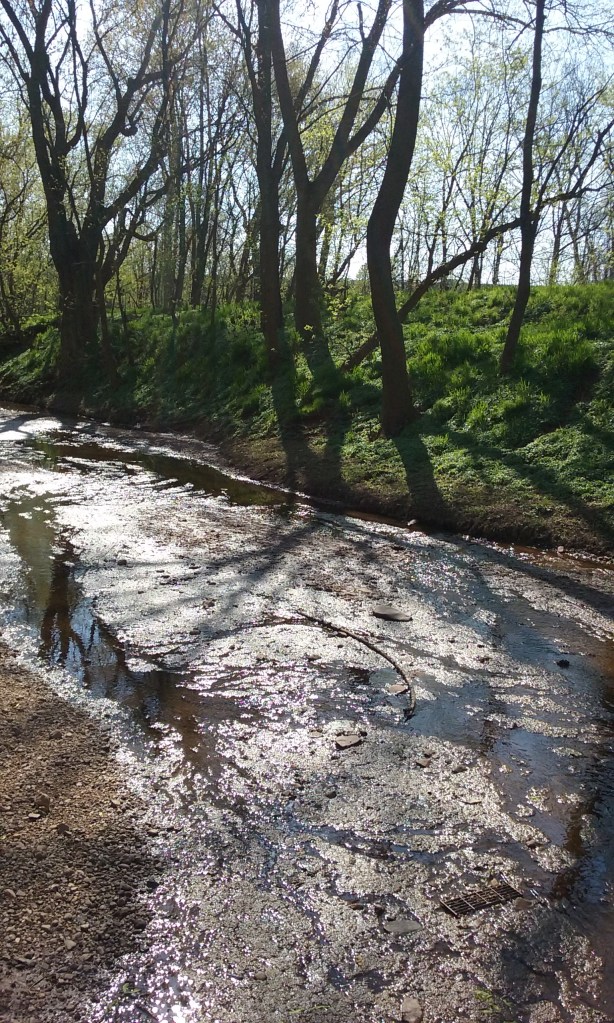
I could drift into poetic enthusiasm about the joy of witnessing a kingfisher dive into the river and emerge successfully with a minnow in its beak, or how the setting sun sparkled on the miniature tributaries in the muddy shallows, or how a swallowtail slipped through the trees in mute conversation with the goldfinches and cardinals, but there is another truth. The kingfisher’s bickering chatter competed with belching diesel trucks, the water was choked with muck (and a random metal grate), and the swallowtail flitted over cellophane and alien species choking out native wildflowers. If I am a reliable narrator, which truth do I share with you?

The first photo?

Or this?

20160415_161646.jpg

Or this?

20160415_161826.jpg


Teasel

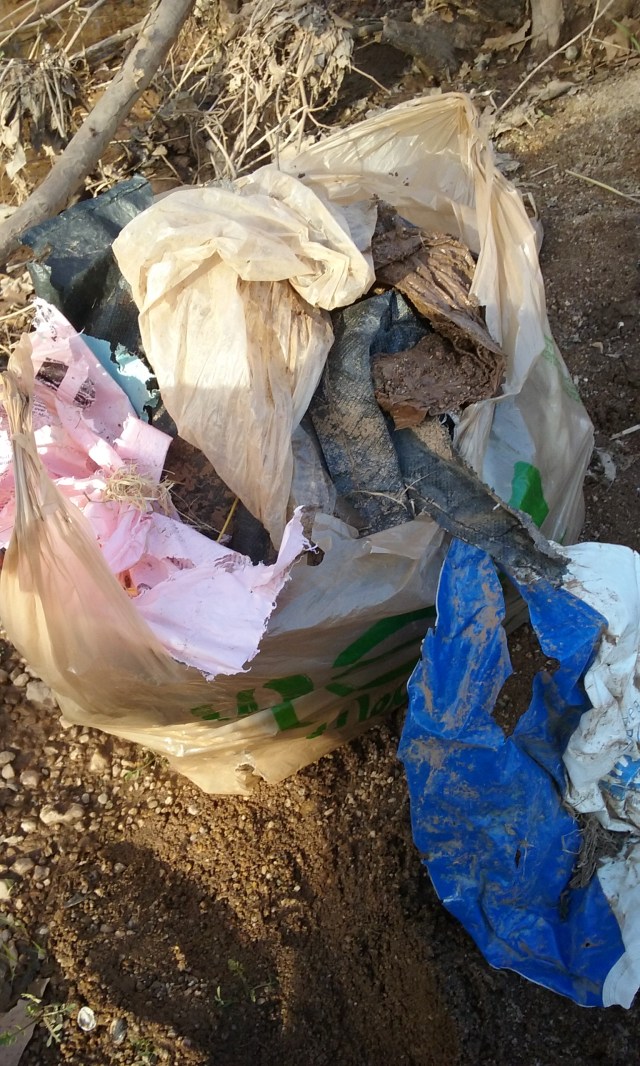
Teasel is what is called a “noxious weed.”  Spiny throughout, from leaf to stem to seed pod, it grows tall, branches out, and lasts through winter as a brown, hollow version of itself. Even as I trample it, it catches and tears at me, scratching my hands, pulling at my boiled wool jacket, yanking my hair.  It shreds holes in my garbage bag, too, forcing me to abandon my trash-gathering task earlier than planned, but it’s hard to resist venturing into the thistle, when tattered plastic flaps from its bones like a poor man’s banner.

The Worst Kind of Trash


//embed.widerimage.reuters.com/stories/chernobyl-wilderness-regained


I referred in an earlier post to my past identity as a Classical Archaeologist, but I failed to mention my favorite subject and place.  Researching my master’s thesis, which focused on ancient cultural perspectives on drinking, brought me to Ukraine, where Greeks settled on the Black Sea and came into contact with the native nomadic Scythians, who ruled the steppes from the 7th to 3rd centuries B.C.  The Scythians, and the gorgeous golden loot they left behind in their graves (burial mounds called kurhany or kurgans), have been the subject of many exhibitions, including “Sycthian Gold” at the Walters Art Gallery in Baltimore, Maryland in 2000. Ukraine’s history is fascinating, but its countryside, cut through by the Dniepr River, is equally so.

The issues that the country currently faces are far beyond the scope and focus of this blog, but there is one glaring overlap of concern.  On April 28, 1986, almost exactly 30 years ago, an accident occurred at the Chernobyl nuclear reactor, in what was then Soviet Ukraine, that spewed contaminated radioactive waste over a large swath of the surrounding region. The people that lived in the region (which includes part of modern Belarus) were eventually evacuated, and the subsequent “exclusion zone” has existed without humans ever since.  Other, wilder animals have since returned and multiplied to fill the void.  It is an amazing place to see now, but we still don’t know what it will really mean for these animals to live in a place that we have, so literally, trashed.

I feel as if I’ve strayed far from the Monocacy, but looking for beauty in disaster, questioning our human influence on nature, those are some reasons why I write.  And when someone shared with me this story from Reuters, although it focuses on the zone in Belarus, I felt that I should pass it on.  The pictures and video are, like Ukraine, heartbreakingly complicated and beautiful.


Trashology

20160404_164533.jpg

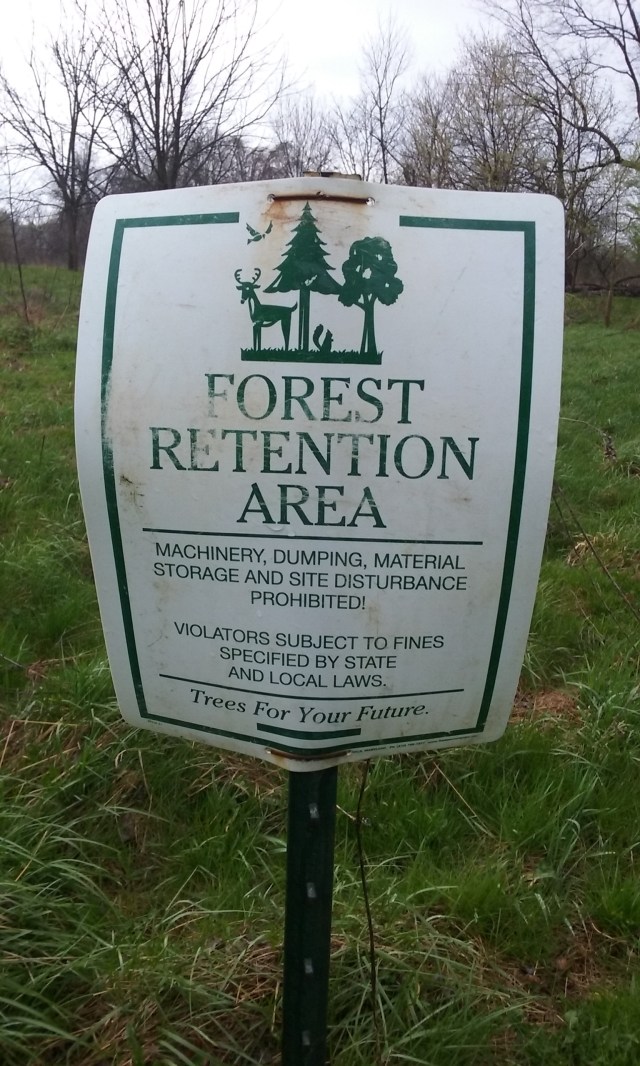
Yesterday, just for fun, I recorded the brand of every piece of trash I gathered.  I was exploring new territory, an open meadow with lots of prickly shrubs that I usually avoid (see the sign above), and the quantity of cups and cans overwhelmed me.  There was much more than I could carry:

Deer Park Water

Mountain Dew (Diet and otherwise, many times over)

Dairy Queen

Sheetz

Monster Energy

Bud Light

Wegman’s

Harris Teeter (migrating trash, apparently)

Powerade

7-11

Coca Cola

Domino’s

Olive Garden

Utz

Starbucks (for Tammy, whoever and wherever she is)

Pepsi

Tropicana

Rockin’ Refuel

Fanta (orange)

A&W Cream Soda

Gatorade

McDonald’s

Rita’s Italian Ice

I brought all of these home, some for the trash can, but most for recycling.  Unfortunately, the city only gathers the recycling every other week, so I always end up filling the recycling can, bin and extra cardboard boxes of my own to overflowing.  I’m a little concerned about how much more trash warmer weather will generate. I might have to start begging my neighbors for recycling space.

The Monocacy Rocks

20160403_164707.jpg

I should be writing about the fairyland that the wild blooming bluebells have made of “the island,” but it’s just too cold.  Instead, let’s talk about geology.

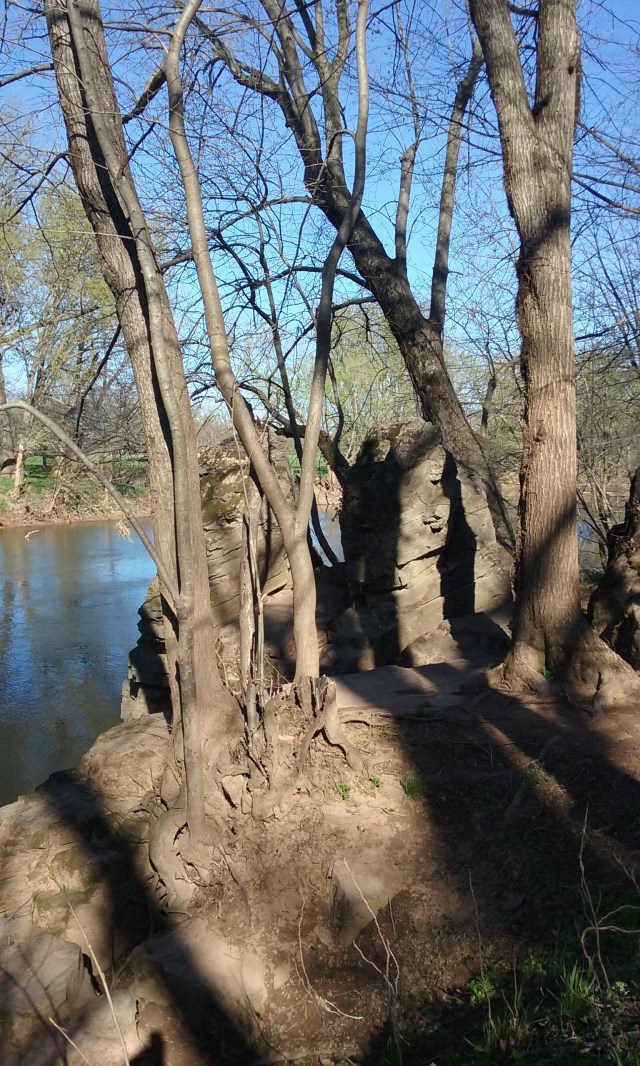
Referring to my copy of Roadside Geology of Maryland, Delaware, and Washington, D.C. by John Means (Mountain Press Publishing Company, 2010), I can tell you that the Monocacy River, which drains most of the Frederick Valley, is situated on Cambrian Frederick Limestone as it flows through the city and its immediate environs. As I walk with my sons along the river’s shores, sometimes under tall embankments created by years of flooding, we pick up lots of quartz and limestone.  My oldest son has become skilled at skipping the flatter pieces, even managing to eke out  5-7 jumps from large 5-pounders. Over the weekend we veered off our usual path and stopped at some very striking limestone formations that jutted out about 15 feet over the water.  While my son found huge rocks to roll into the river – the splash was marvelous from such a drop – I found a McDonald’s cup.  I hope it was iced tea that I dumped out of it.

Trash from the Past

20160330_171914.jpg

I guess I’ve always had a thing for trash: digging for it, documenting it, and treasuring it. While the blog’s subtitle calls me a “girl,” by now it should be obvious that I’m long past being any such thing, at least in externals. I’m old enough to have accumulated  a number of identities, and one of my favorite ones, one which I thought was never to be picked up again, was archaeologist.  In my twenties, I got an advanced degree in Greek, Latin, and Archaeology and did some digging for a few summers at some classical sites. It’s actually not as exciting a job as most expect.  While I was in the trenches, tourists often asked whether I had found any gold.  I smiled and said, “no,” because I understood that they meant the shiny mineral, but I had found some of my own gold: potsherds, pieces of glass, dirt floors, roads, foundations, and even a tiny marble head. In other words, I had found ancient trash. And, to me, it was fascinating.

The trash I’m finding today could be the treasure of tomorrow.  So should I feel bad about picking it up?  I’ve decided no.  What I find is shreds of plastic, tin cans, agricultural waste, bits of clothing, machine parts, et alia (see, I do know Latin), that has floated down the river.  Its lost its cultural context and, therefore, is of little future value for those who may wish to understand us, say, 1,000 years from now. In other words, there’s no need to give myself a pat on the back for leaving a yogurt container to be buried in the sand.

There are active archeologists (note the different spelling for those who work in North America…wow, I am such a geek today!) working along the Monocacy River.  In fact, there is a large Native American settlement off Biggs Ford Rd. that has been excavated multiple years by the Archeological Society of Maryland.  From approximately 1000-1500 AD, it was occupied by peoples of the Montgomery and Keyser Complex. For more details and pictures from the 2014 expedition, see the link below.

http://marylandarcheology.org/2014_Field_Session_Biggs_Ford.php

Oh, and it’s April, so happy Maryland Archeology Month!


Variation on a Theme: Tires

Tires.  Lots of Tires.  In the water, on land, buried in mud, stuffed with leaves, lacerated, worn, big, heavy, and all dumped at the river.  I have no idea how to deal with them.  If I can dig them out, they’re still too unruly to walk home, especially through a neighborhood with distracted kids. And, even if I do get them home, I have no way to dispose of them. Since Frederick City has no bulk trash pick-up, I either have to hire a dumpster or rent a truck to haul the tires to the dump myself.  Maybe this is why the tires are here in the first place.  Maybe it explains a lot of the trash I find at the Monocacy. Taxes aren’t particularly low in Frederick City, and it seems to me illogical and uninspired not to use some of them for a public service that might well serve the environment as well as the city’s people. So, here’s a message, Frederick: Bring back bulk trash pick-up.

Oh, Baby, Baby (Trees)

20160329_090806.jpg

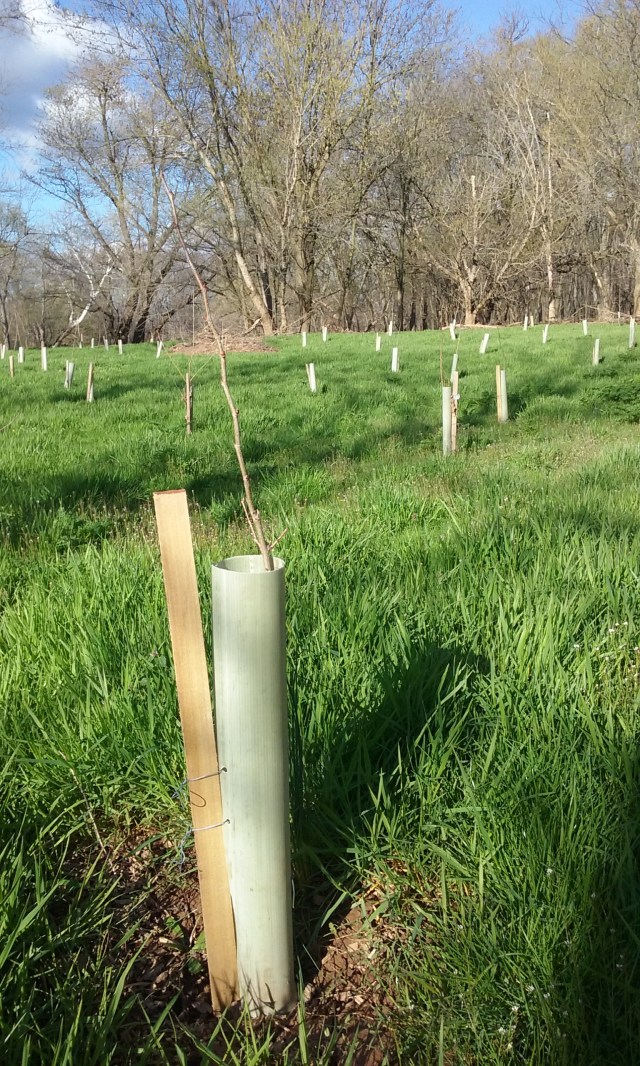
Last summer, an intrepid group planted a number of saplings along a grassy shoreline of the Monocacy River, in an effort, I am sure, to restore the wooded habitat that development had destroyed.  They bolstered these young trees with stakes and corrugated plastic, likely to protect them from foraging White-tailed Deer (of which there is a herd of over twelve that roams my small part of the river), and rabbits (who eat my native shr-, oh, never mind, I’ll start sounding like Elmer Fudd). It’s equally possible, however, that they were hoping to strengthen them against flood waters, which wash over this plain at least two to three times a year. Sadly, I’ve found the corrugated plastic hanging from branches a half mile down the river.  Still, as you can see, there are lots of trees left, and their leaves are just beginning to bud in the March sun.

The Trash of Which I Do Not Speak (or Photograph)

20160316_114921.jpg
Happy Birthday, Girl!

Yesterday, my labrador retriever turned 13 years old.  She’s lumpy and bumpy, the ACL she had repaired years ago is clearly aching with arthritis, and she’s deaf and even a little smelling-impaired, but she still wags her tail when she sees her leash, insists on car rides to the woods, and pulls me like a dogsled when she sees a body of water.  She and my other dog, a nervous 4-year-old rescue of unknown lineage, accompany me on most of my walks along the Monocacy.  I take bags specifically for their messes, which I pick up and, despite the smell, carry with me for miles until I reach my trash can at home. It can get a little disgusting some days, but it’s worth it not to leave their piles to filthy the river or someone’s shoes, or even just mar the view.  Besides, I’ve decided that if anyone is idiotic enough to attack me, I could swing the bags in their face and they’d likely decide I wasn’t worth their trouble.

While I am happy to pick up my own dogs’ messes, I’ve decided that I absolutely will not pick up the messes of anyone else’s.  I know that I should, and feel guilty when I pass by the melting piles of it, but I just won’t. So, you won’t hear about this particular kind of waste, or see a picture of it, in or out of a bag, in this blog.  It exists, of course; I’m just pretending it doesn’t so that I don’t activate my gag reflex on a daily basis.

There are those who will argue that there shouldn’t be any dogs on nature trails. The untended messes are part of these protesters’ arguments, but they also object to the dogs’ invisible marking, which scares off other wildlife. Dog-lovers, on the other hand, argue that their companions compel people who might otherwise just sit on their couch binge-watching TV shows to go out into nature and, as they learn to appreciate it, decide to take action to protect it. As a traditional peacekeeping middle child, I say let’s have it both ways, maintaining natural areas where dogs are not allowed and other areas where they are encouraged by making available waste bags and plenty of trash cans to their responsible owners.

Anyway, I hate preaching. And I hate picking up poop. And I’m not talking about any of this ever again.